
Interview by Io Oswald

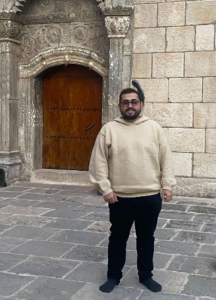
Dawod Salim Haji is a Yazidi psychotherapist from the city of Sinjar, currently residing and working in Duhok, within the Kurdistan Region of Iraq. Dawod and his family were displaced from Sinjar following the ISIS attack on August 3, 2014, a day that changed the course of his life and motivated him to dedicate his efforts to helping all members of his community, especially his fellow Yazidis, heal psychologically and rebuild their lives.
Dawod works with internally displaced persons, survivors, and members of the host community, providing specialized psychological support to victims of violence and conflict. In the past two years in particular, his focus has been on Yazidi survivors who were freed from ISIS captivity and who continue to suffer from the deep psychological wounds caused by abduction, enslavement, sexual violence, and forced separation from their families.
 In his clinical practice, Dawod works with clients suffering from Post-Traumatic Stress Disorder (PTSD) and its complex symptoms, including recurrent nightmares, intrusive memories, chronic fear, and pervasive feelings of shame and guilt. Despite the urgent need for psychotherapy, practitioners in his region face significant challenges — foremost among them the stigma surrounding sexual trauma and the skepticism toward modern therapeutic methods.
Although need is great, people in Dawod’s community are often reluctant to seek therapeutic help due to a combination of shame around sexual trauma and suspicion of unfamiliar practices. However, Dawod emphasised how he has found that Eye Movement Desensitization and Reprocessing (EMDR) therapy to provide an effective and safe approach for helping clients, as it allows them to process trauma without the need to verbally recount painful details.
In such cases, Dawod applies the “Blind to Therapist Protocol,” an advanced EMDR approach that has proven effective for trauma cases involving high levels of shame and guilt, such as sexual assaults or deeply personal traumas. This protocol enables clients to process the emotional and physiological distress linked to the traumatic event without disclosing specific details, thereby reducing anxiety and enhancing their sense of safety and control within the therapeutic process.
Many clients have expressed deep gratitude for Dawod’s therapeutic approach, emphasizing that his methods have helped them confront their painful experiences more safely and effectively compared to other techniques that rely on direct exposure or detailed narrative recounting — approaches that many clients were not yet psychologically ready to endure.
Beyond the EMDR skills supported by TAUK supervisors, Dawod has incorporated his own innovations in his therapeutic practice. For instance, he uses a wooden box as a symbol of the sense of containment. He and the client put a stone inside the box which represents the client’s trauma. The box is locked and kept in the therapy room, and the key is given to the client. During each session, Dawod and his client open the box together and take out the stone, signifying that the time to work on processing that trauma has begun. But as soon as the box is closed and locked, the client can leave the trauma behind and reenter normal life. This approach is effective in Dawod’s work with Yezidis due to the strong cultural emphasis on tangible objects and symbolic meanings.
Clients told Dawod that they wished they had gone to him first, before going to the more common approaches that involve narrating traumatic experiences in chronological order. The emotional strain of detailing their traumas chronologically often proved too great for clients, with many dropping out of therapy prematurely. However, Dawod’s approach respects the limits and capacities of his clients, and therefore provides a more sustainable and effective form of treatment. The box and stone helped clients to remain grounded in the present and therefore promote feelings of safety and control during therapy. Clients have found his method to be more respectful of their psychological boundaries and more attuned to their cultural context and practical needs, making therapy more sustainable, profound, and positively impactful.
Throughout his professional journey, Dawod has continually sought to develop his academic and clinical skills. This drive led him to contact Shiraz Farrand, President of Trauma Aid UK (TAUK), to inquire about innovative ways to enhance the quality of EMDR implementation in his therapeutic work. This initiative was also an opportunity to express his deep appreciation for the continuous support that TAUK has provided since the early stages of his career — through training, supervision, and professional resources that helped him advance his work in a highly challenging environment.
Following his communication with Shiraz, she reached out to the Directors of the digital platform bilateralstimulation.io, Yanick and Benjamin, on his behalf and succeeded in securing technical support and specialized devices for psychological treatment using Bilateral Sensory Stimulation (BLS). This support enabled Dawod to apply EMDR through modern digital means, improving the quality of therapy sessions and facilitating the delivery of effective psychological services in resource-limited settings and enhanced the credibility of trauma therapy.
Dawod has also received supervision from several Consultant Supervisors affiliated with Trauma Aid UK, including professionals from the United Kingdom and the United States, some of whom are Arabic-speaking. This linguistic and cultural diversity has enriched the supervision process and ensured adherence to high international standards of clinical practice.
Dawod believes that working toward professional accreditation in EMDR is one of the most important motivations for his personal and professional growth. This path has given him clear goals and a vision for promoting a culture of professional standards in psychotherapy across Iraq and the Kurdistan Region. He also emphasizes the importance of formal professional recognition as a means to strengthen public trust in psychotherapy and ensure the sustainability and quality of mental health services. Among his future ambitions is to become a Consultant Supervisor in EMDR, contributing to the training and mentorship of new therapists and supporting the dissemination of international standards in clinical practice.
Alongside his clinical work, Dawod plans to conduct an advanced research study to measure the effectiveness of EMDR protocols in treating trauma related to sexual assault and rape, seeking academic and institutional support to realize a project that could have meaningful scientific and professional impact in Iraq and the wider region.
Despite limited resources, Dawod continues his work with determination and a deep sense of humanitarian commitment. He views his profession as a sacred encounter between human beings — an act of accompanying others through their most fragile and painful moments.
As Shiraz described his efforts: “We are deeply encouraged to see Trauma Aid UK supervisees taking trauma therapy—particularly EMDR—to regions that have long needed such resources. While EMDR has been flourishing in many countries for over three decades, Arab Countries, Iraq in particular, have faced immense historical and ongoing trauma without equal access to such effective interventions. It is truly heartening to witness our colleagues grow, take ownership of their professional expertise, and step confidently onto the international stage. Their success is a testament to years of collective effort and the power of sustained investment in local capacity.”
Despite lacking key resources, Dawod shows admirable dedication to the work of healing his community. He told me that he does this work because it allows him to encounter others without judgement, simply as a human wishing to help another human in their moment of need. Dawod has adapted the method of EMDR to suit the needs of his clients, and is looking towards producing research that directly addresses the needs of his community. This is, as Shiraz put it, “capacity building in a nutshell”.
For Dawod, psychotherapy is not only about healing individuals, but also about healing the collective. He believes that supporting survivors and accompanying them on their path to recovery is a form of peacebuilding in a country wounded for decades, and that therapists can serve as bridges connecting pain to hope, and the past to the future.